
cathedral of pamplona
In 1991, in collaboration with architect Mr. Joaquín Lorda Iñarra, we renovated the presbytery of the Cathedral of Pamplona to adapt it to the liturgical provisions issued by the Second Vatican Council.
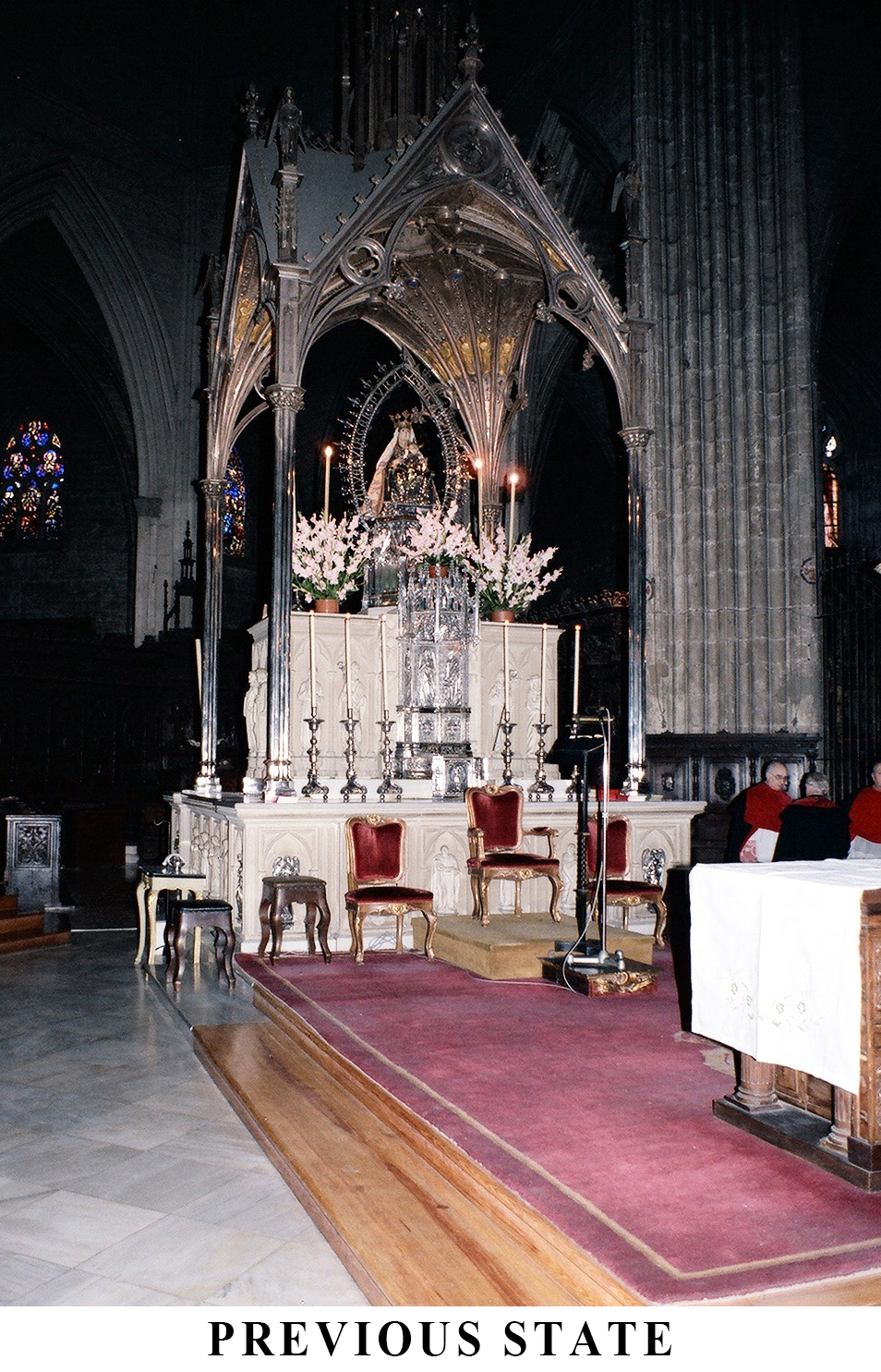
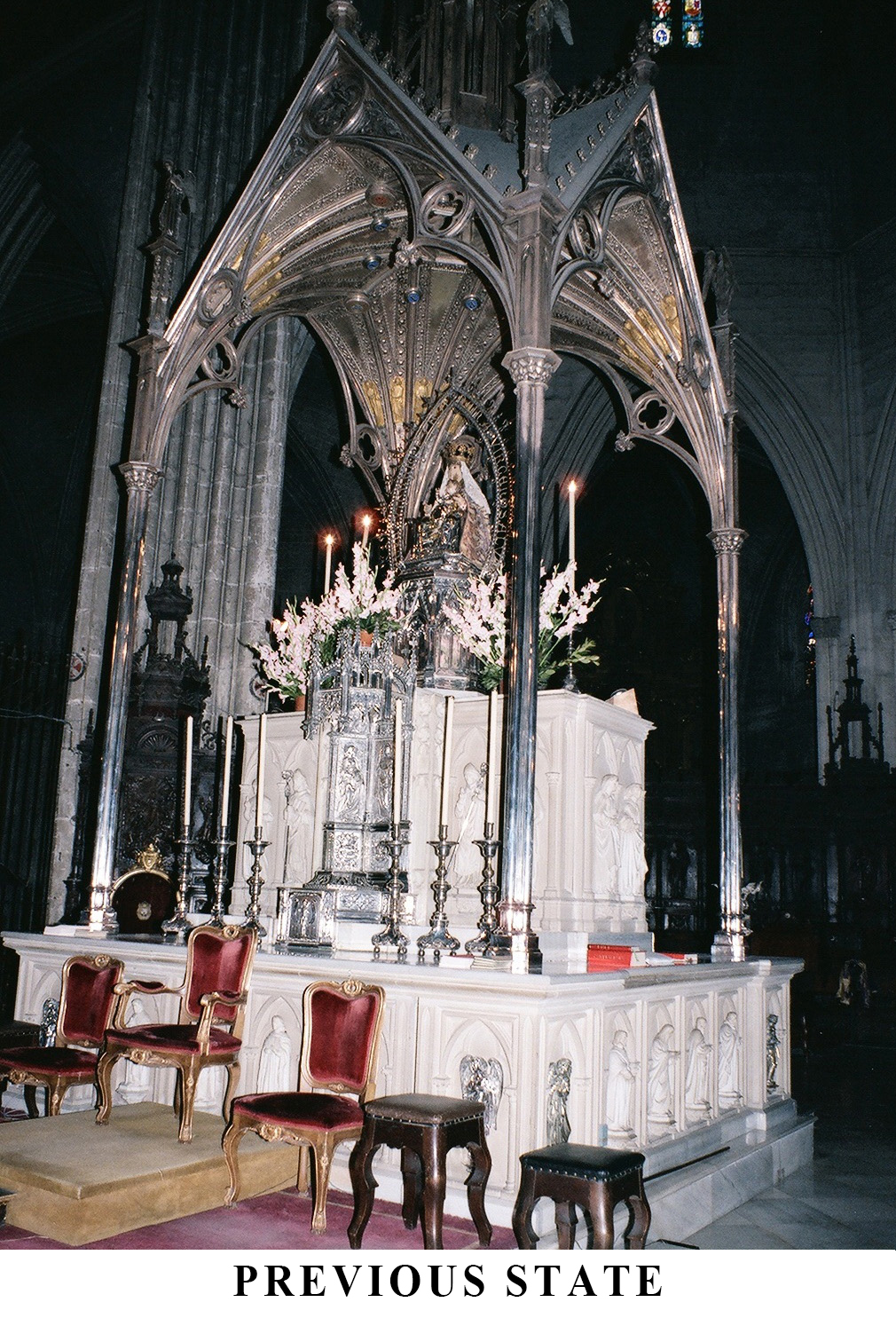
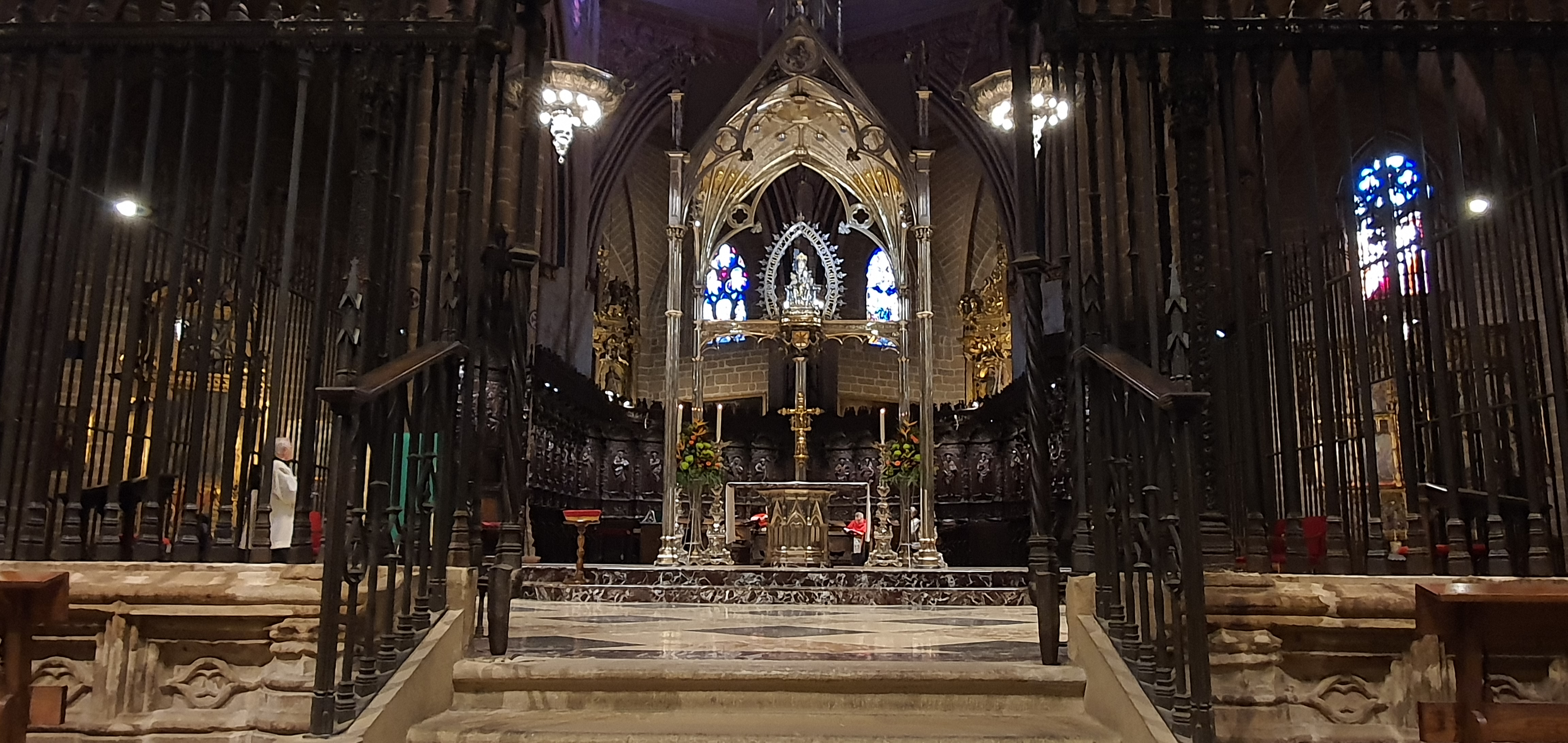
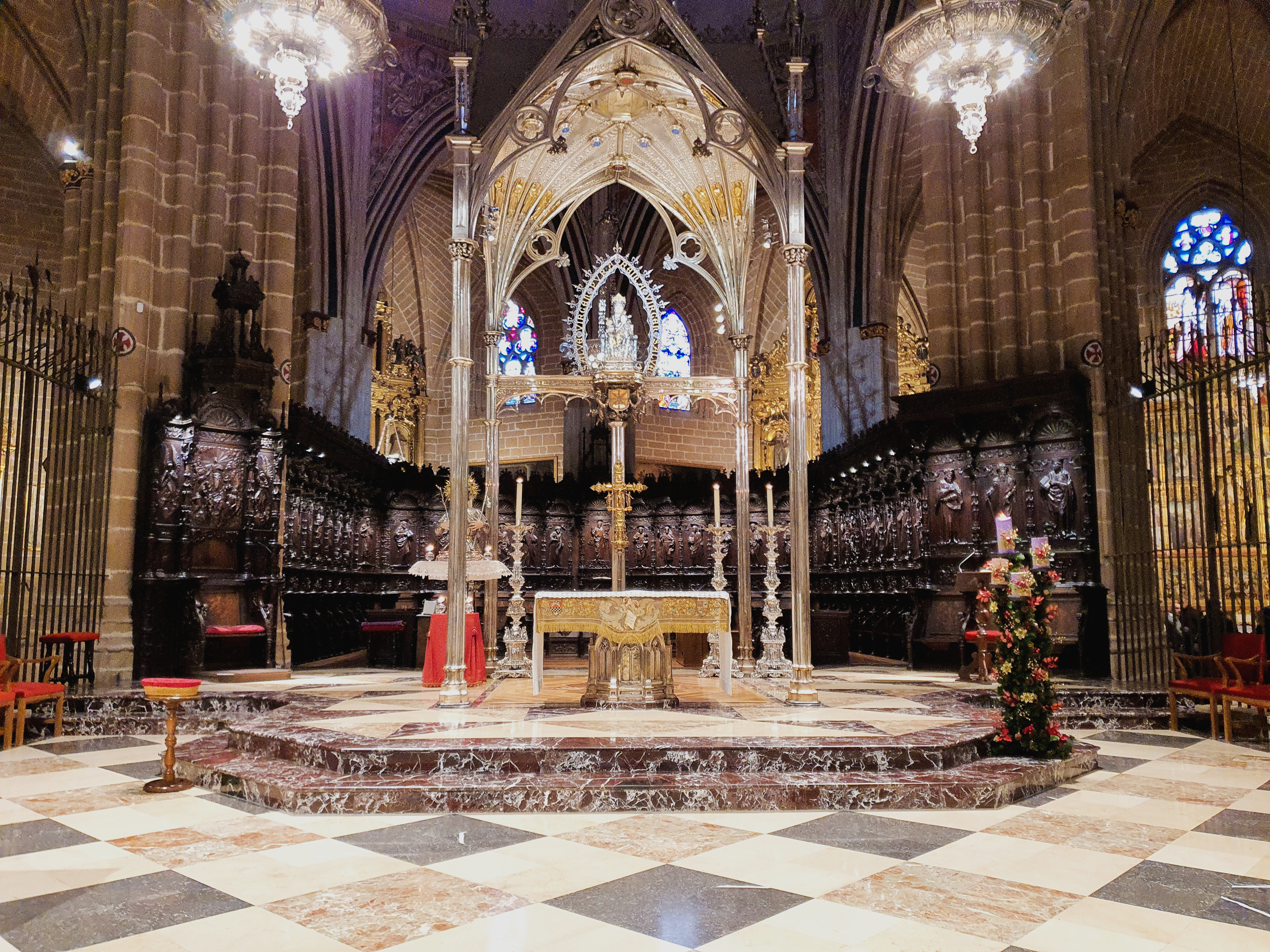
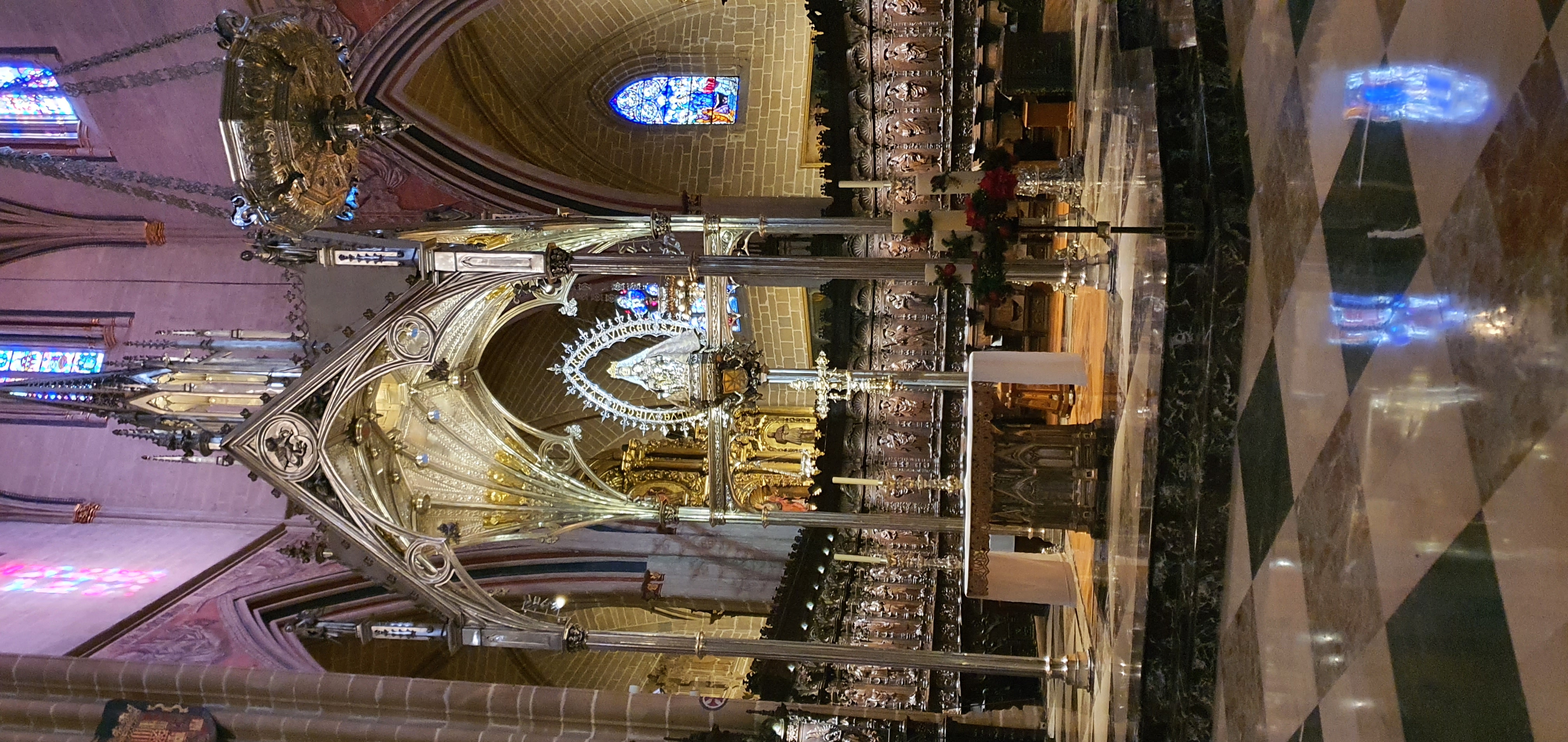
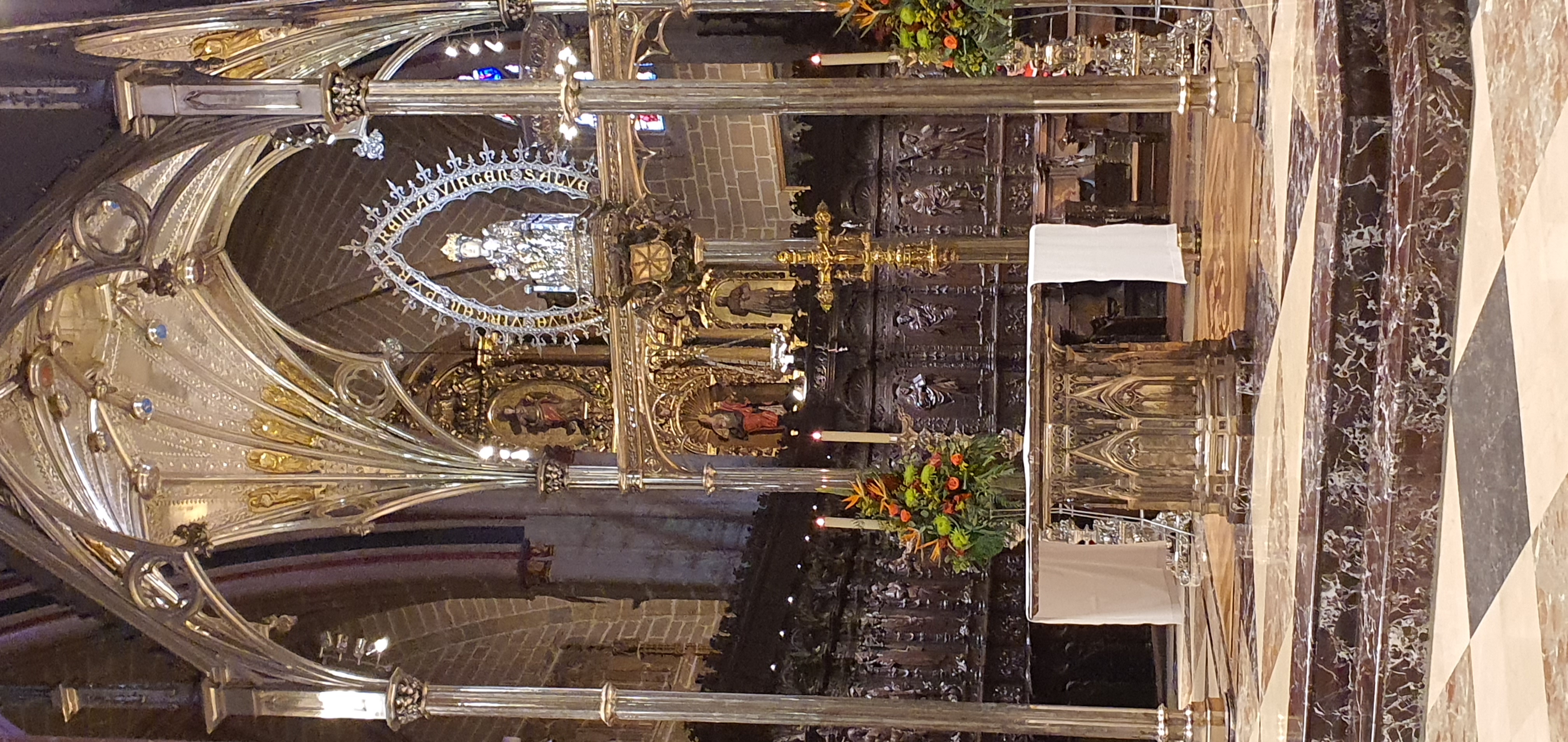
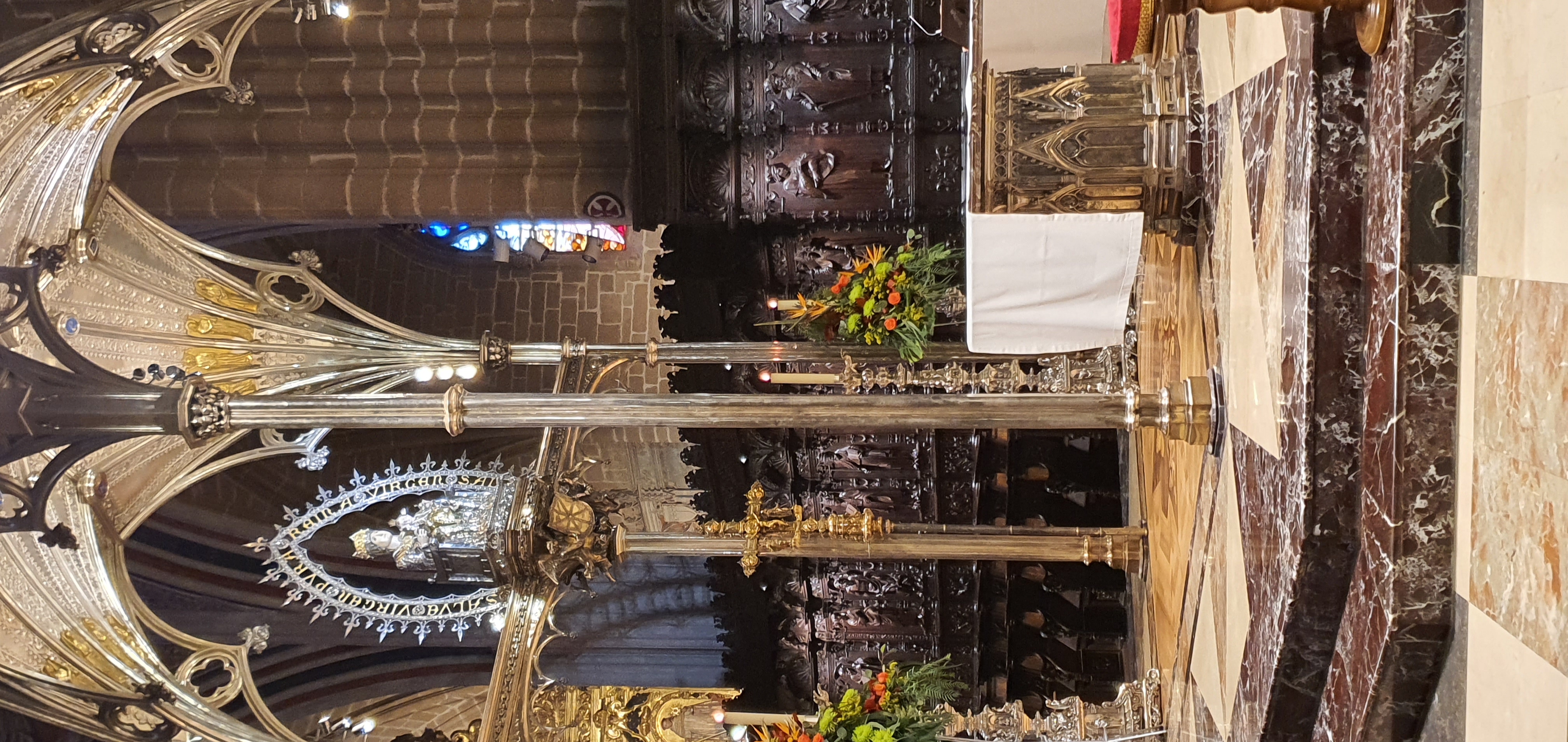
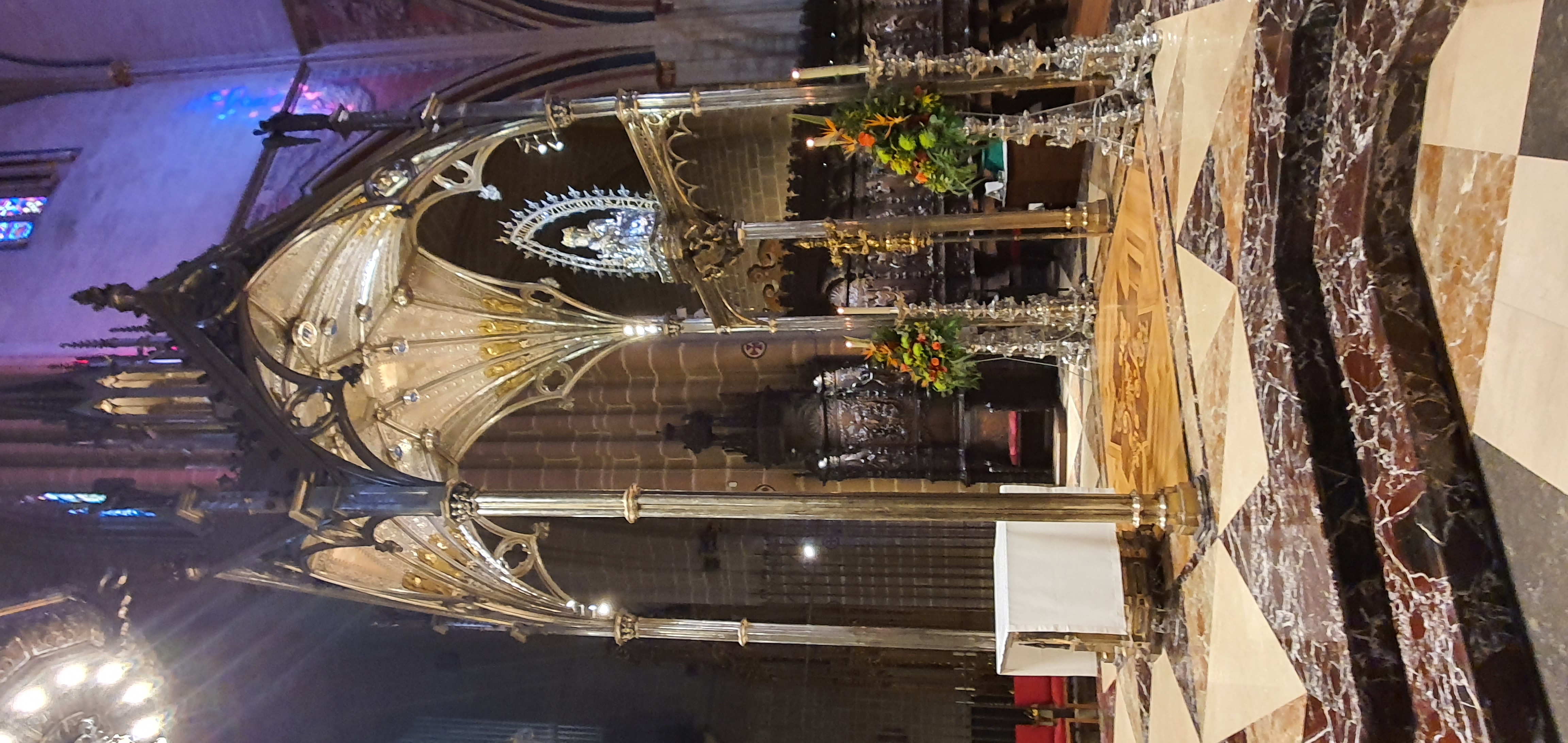
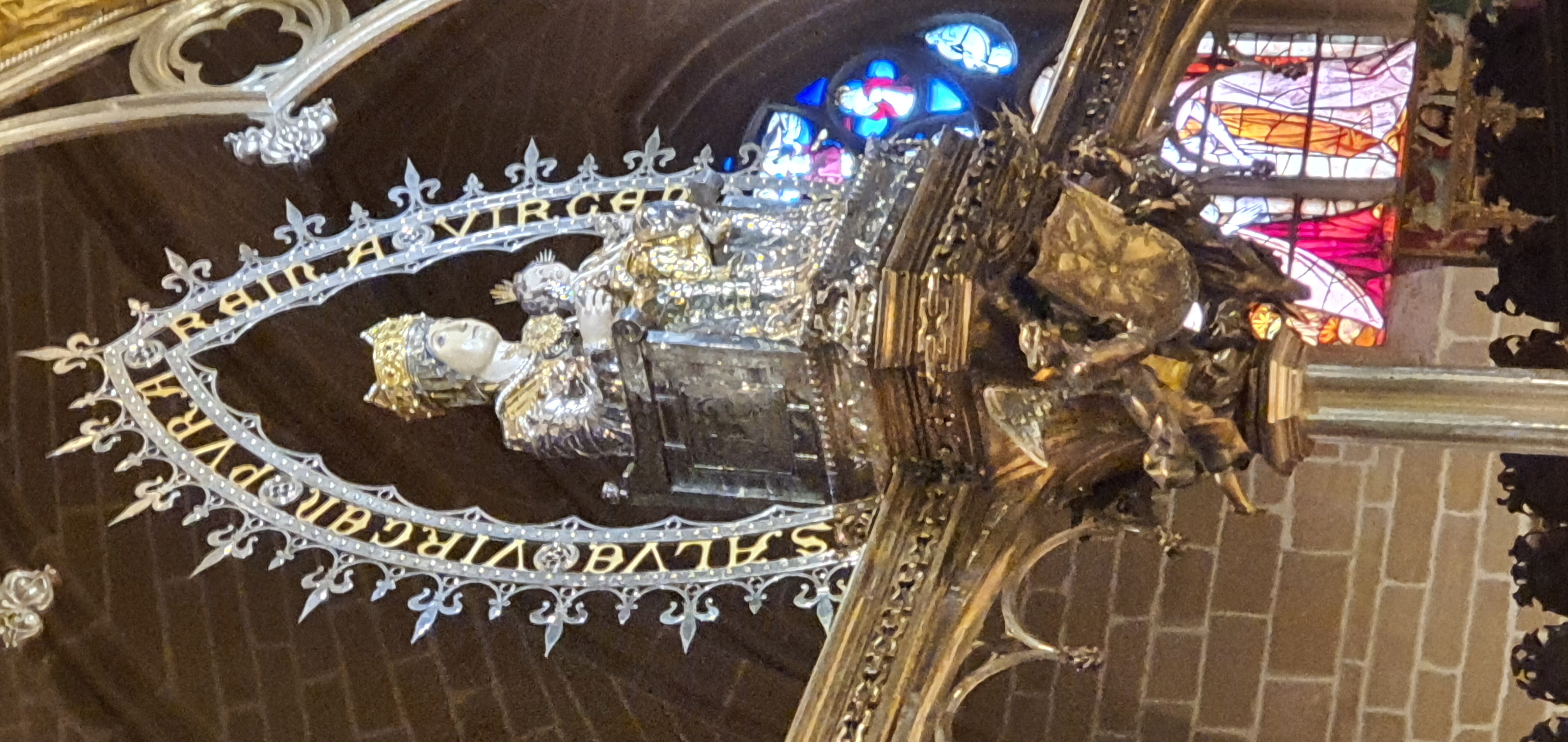
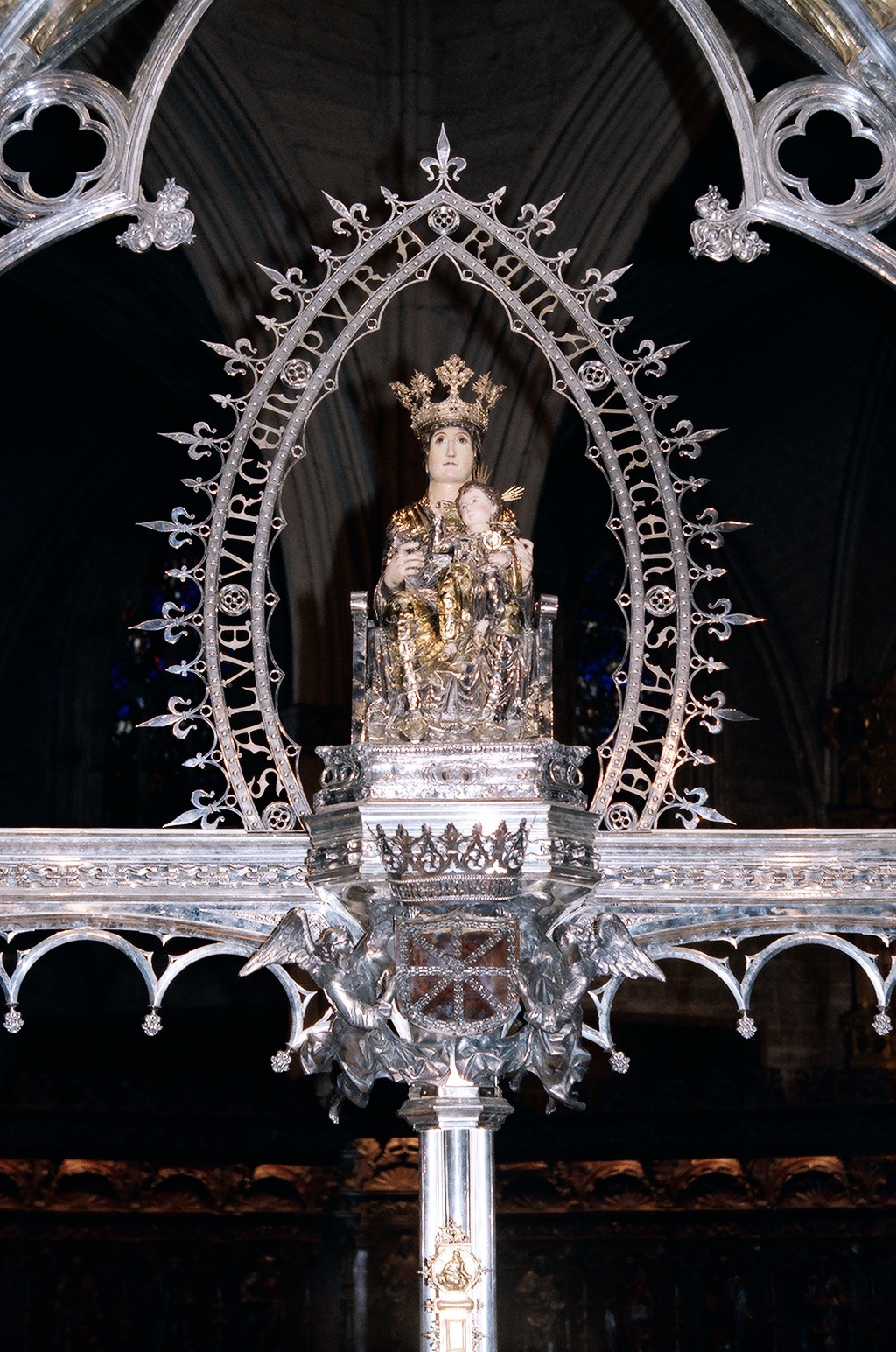
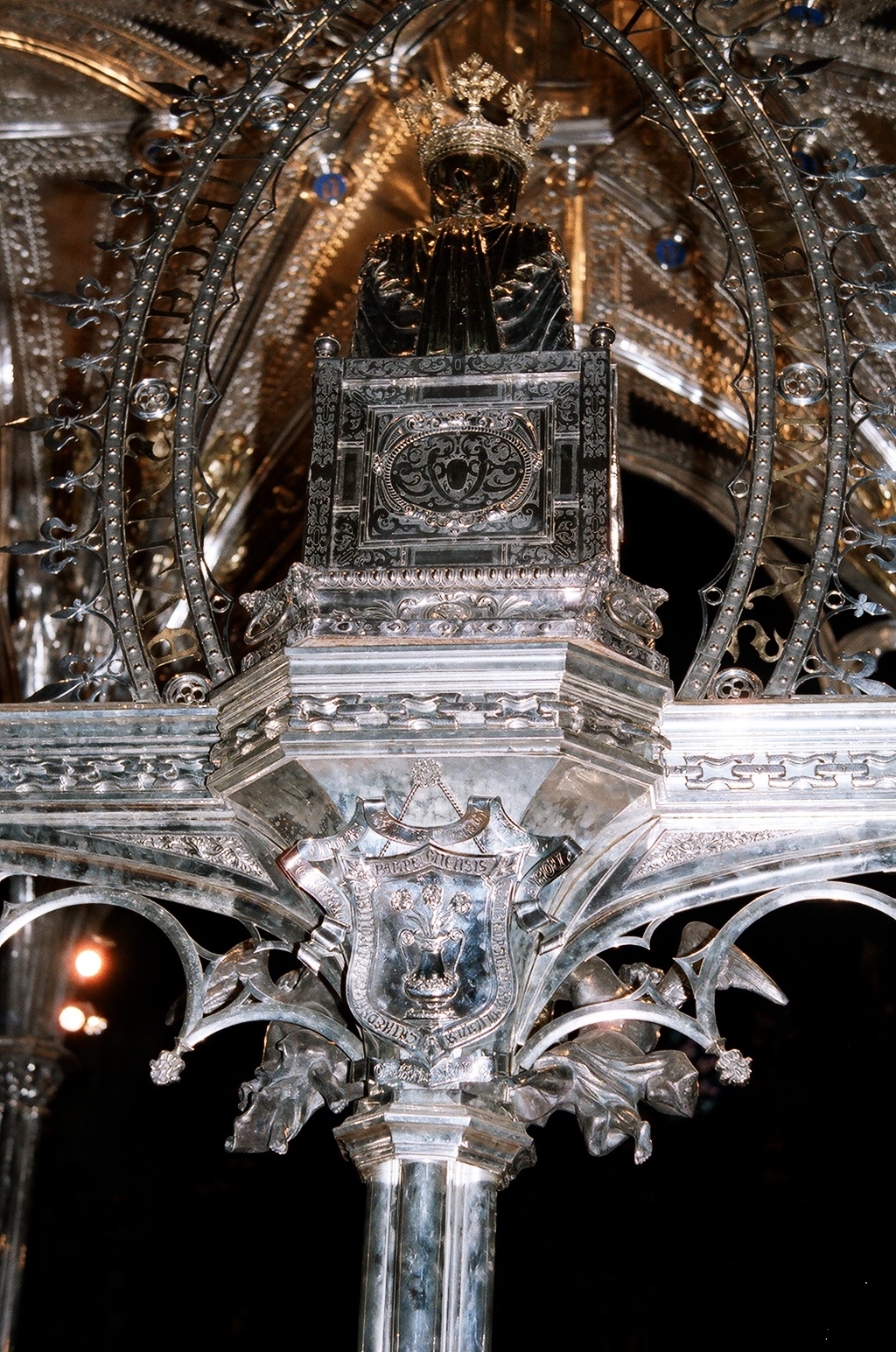
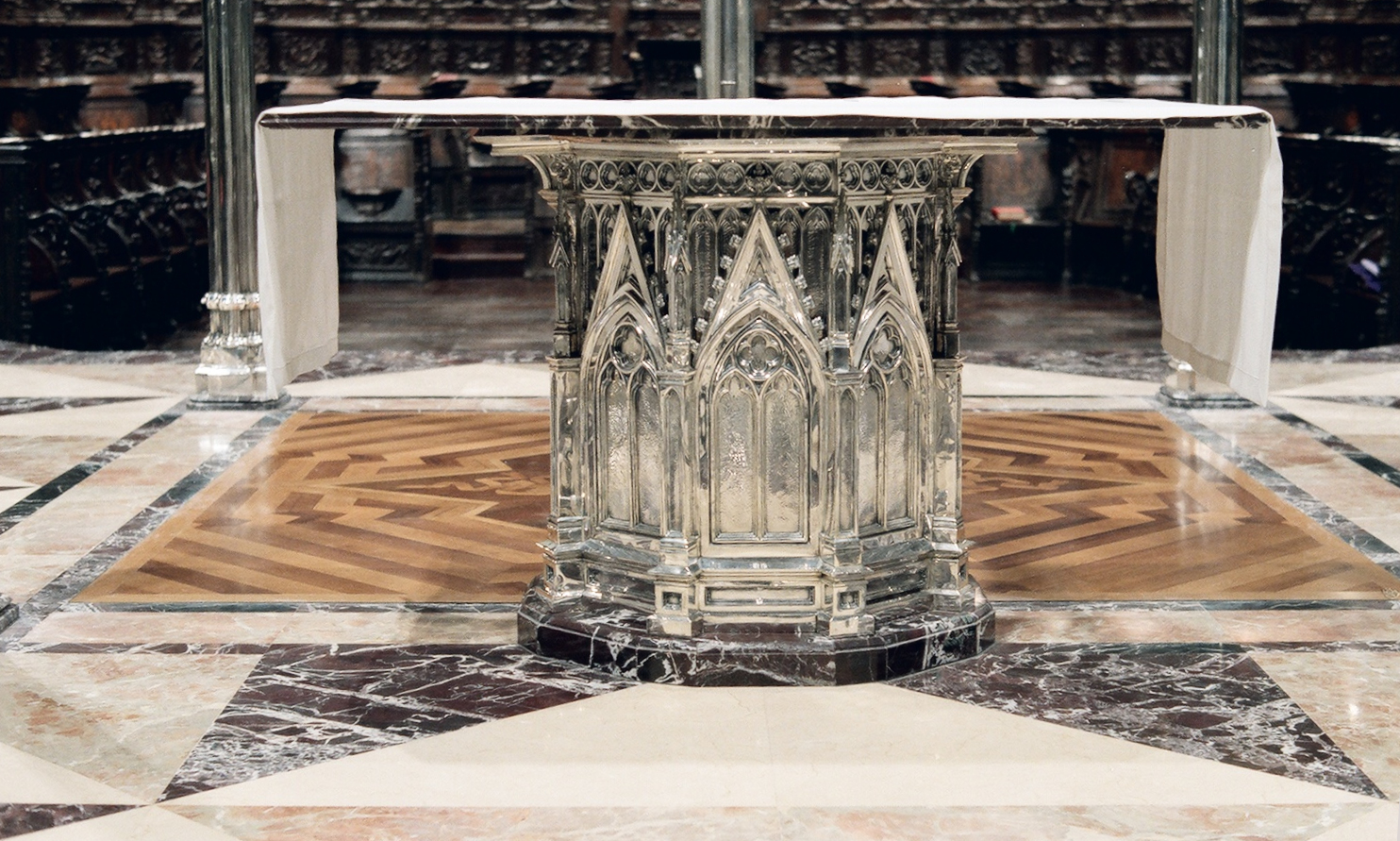
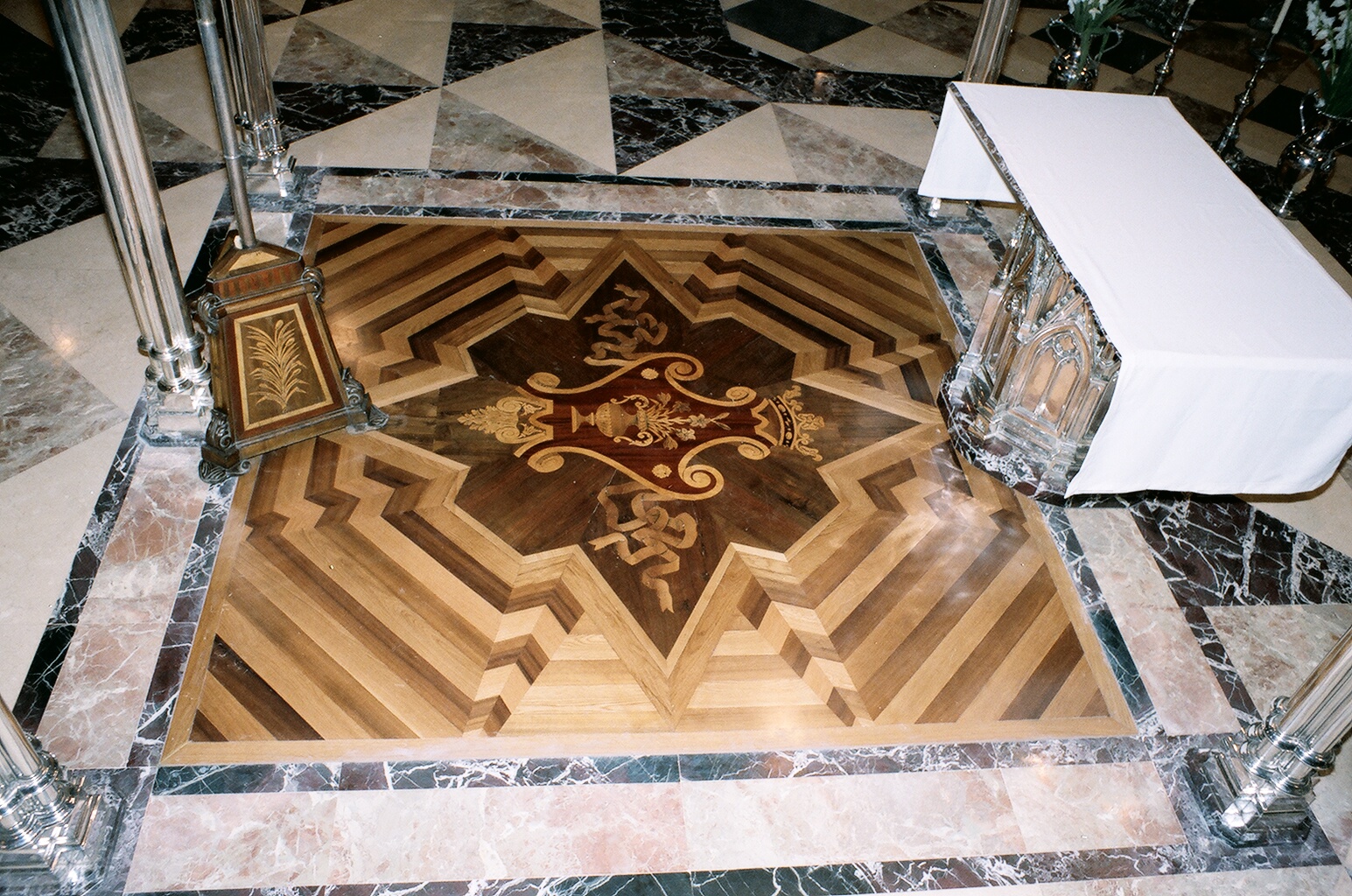
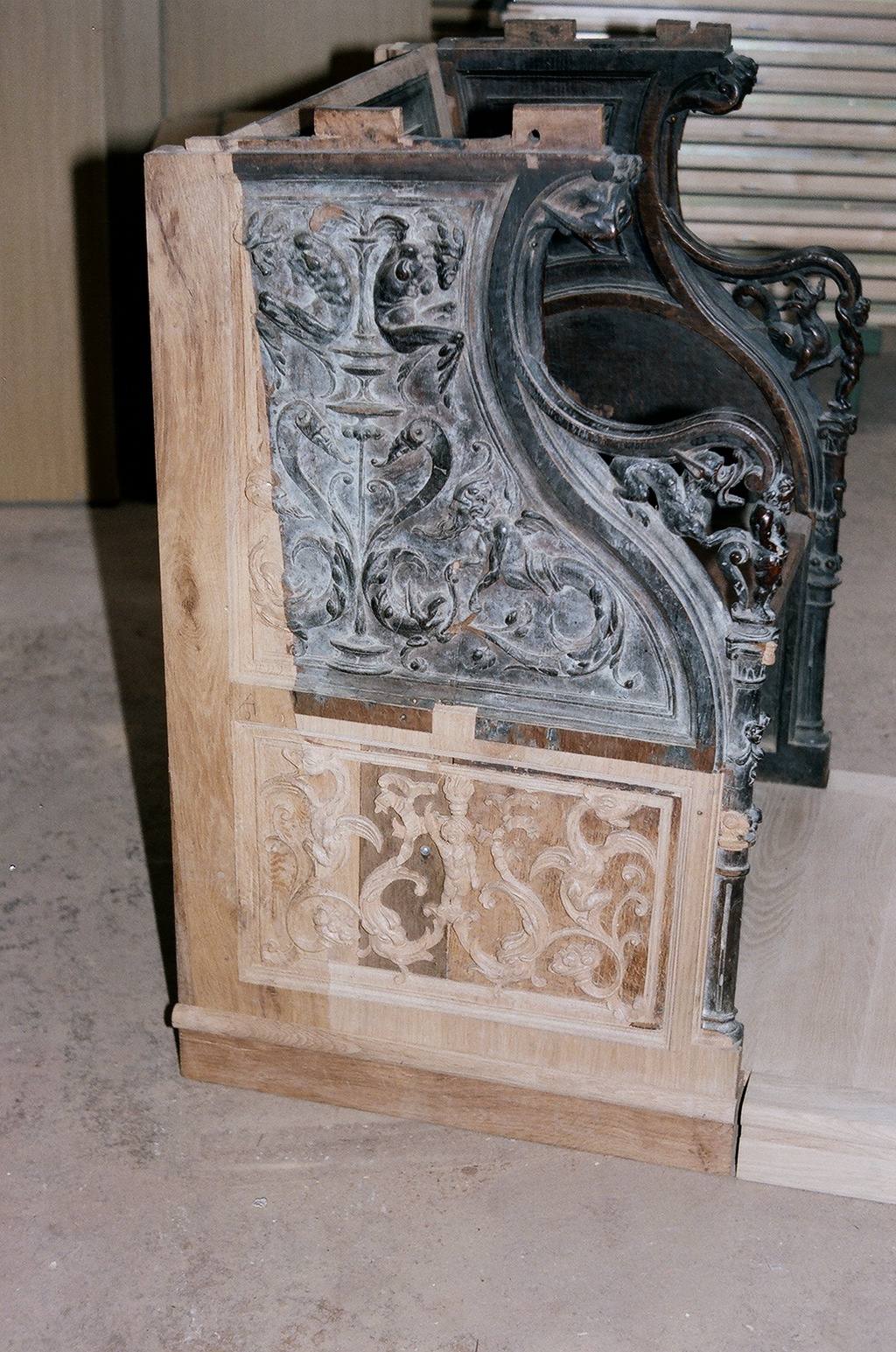
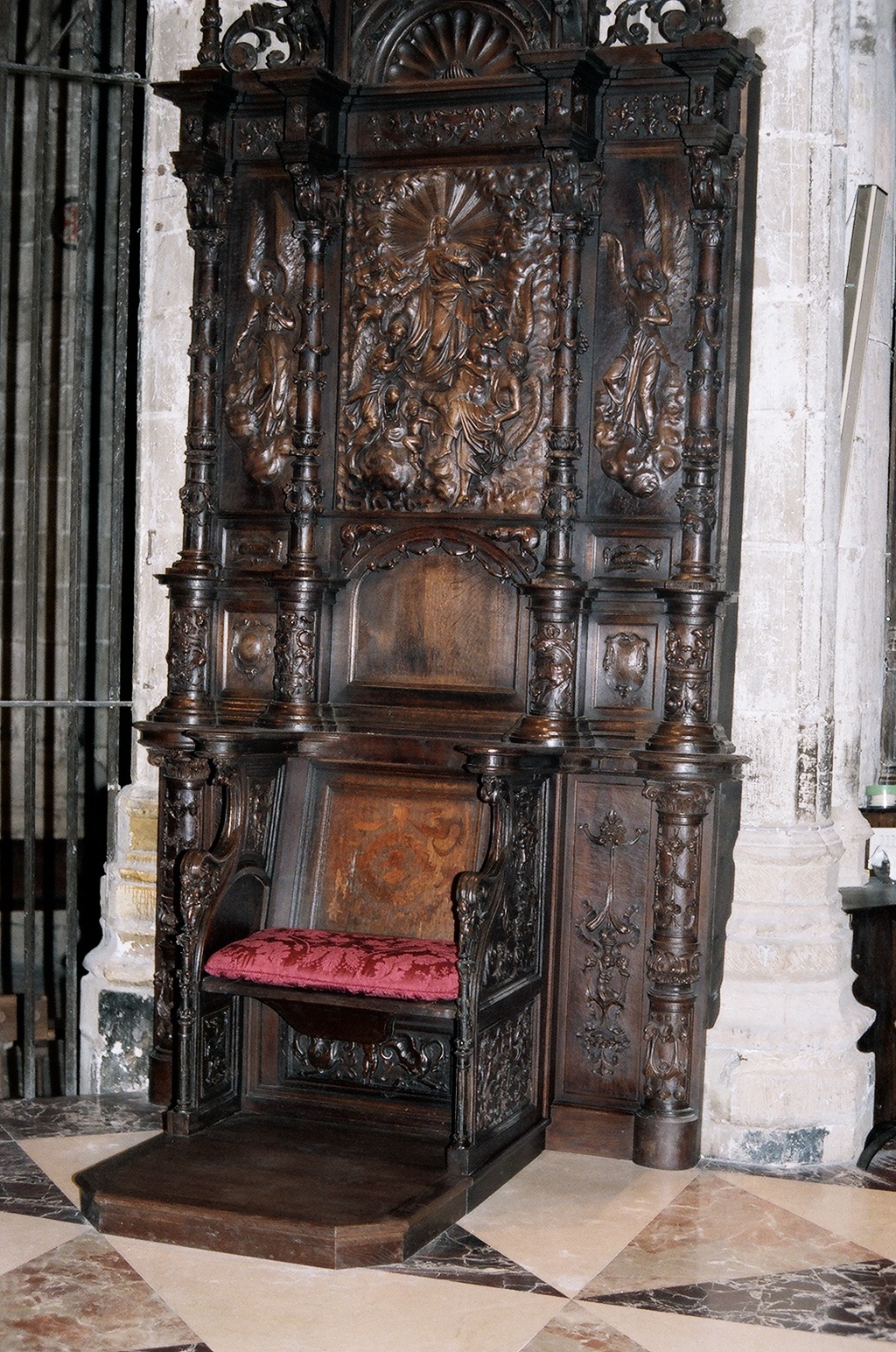
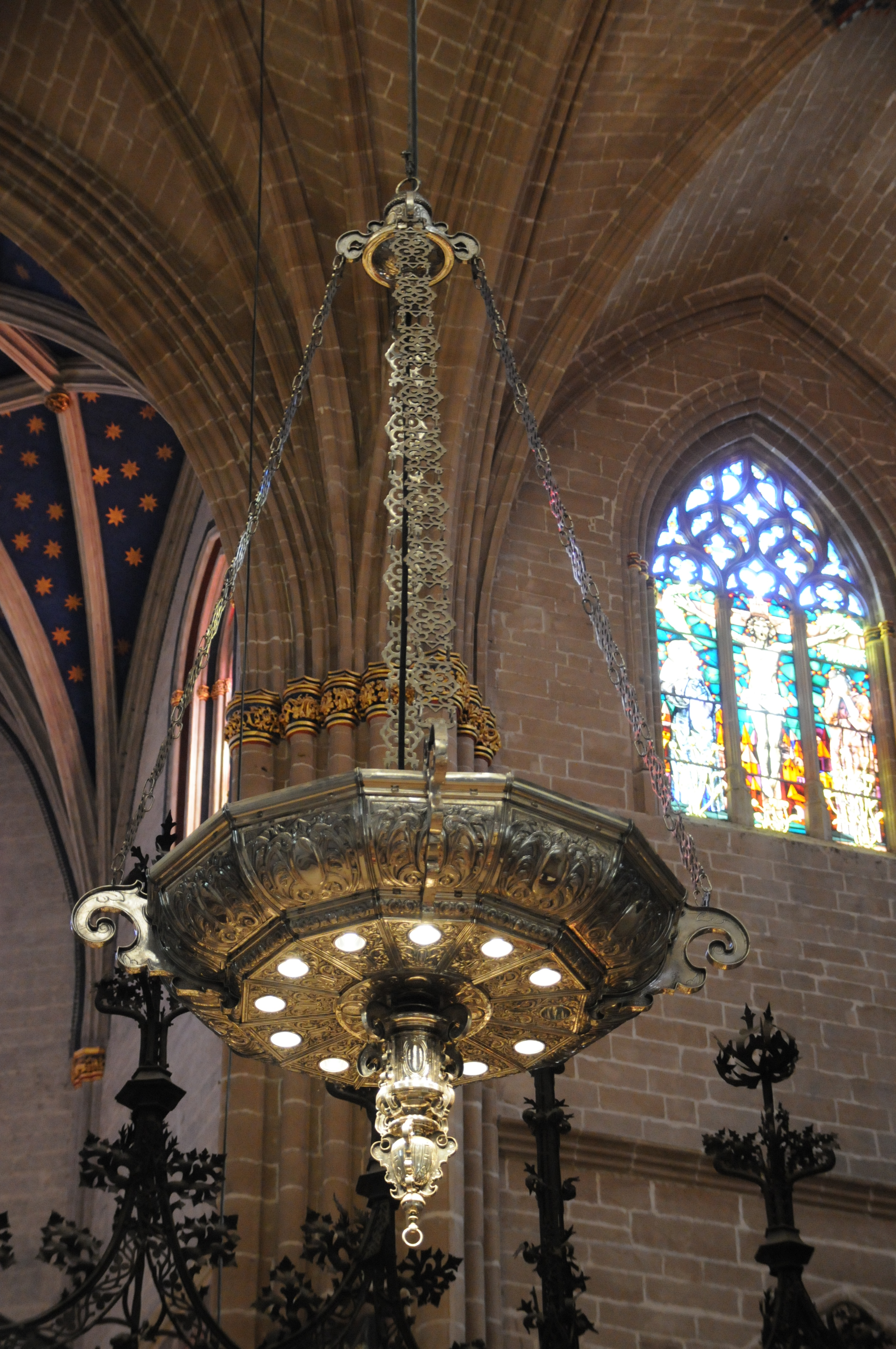
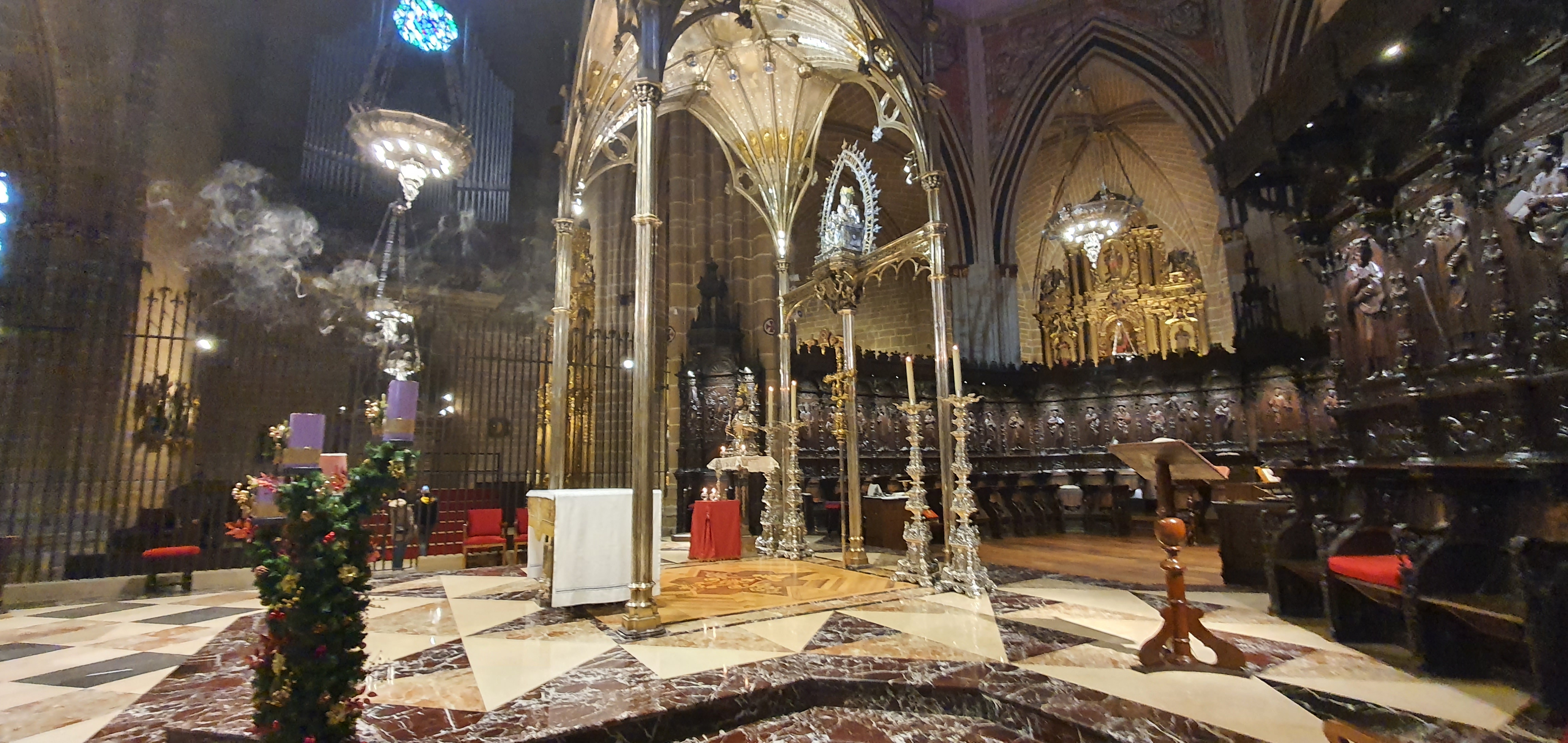
The renovation affected the high altar's space, delimited by an essential 16th-century iron-rod screen. We decided to remove the carved sandstone elements that formed the altar and the throne for the image of Santa María la Real to create a broad and open space. These stone elements, which had a stepped shape, were designed by Mr. José Yarnoz and built in 1946.
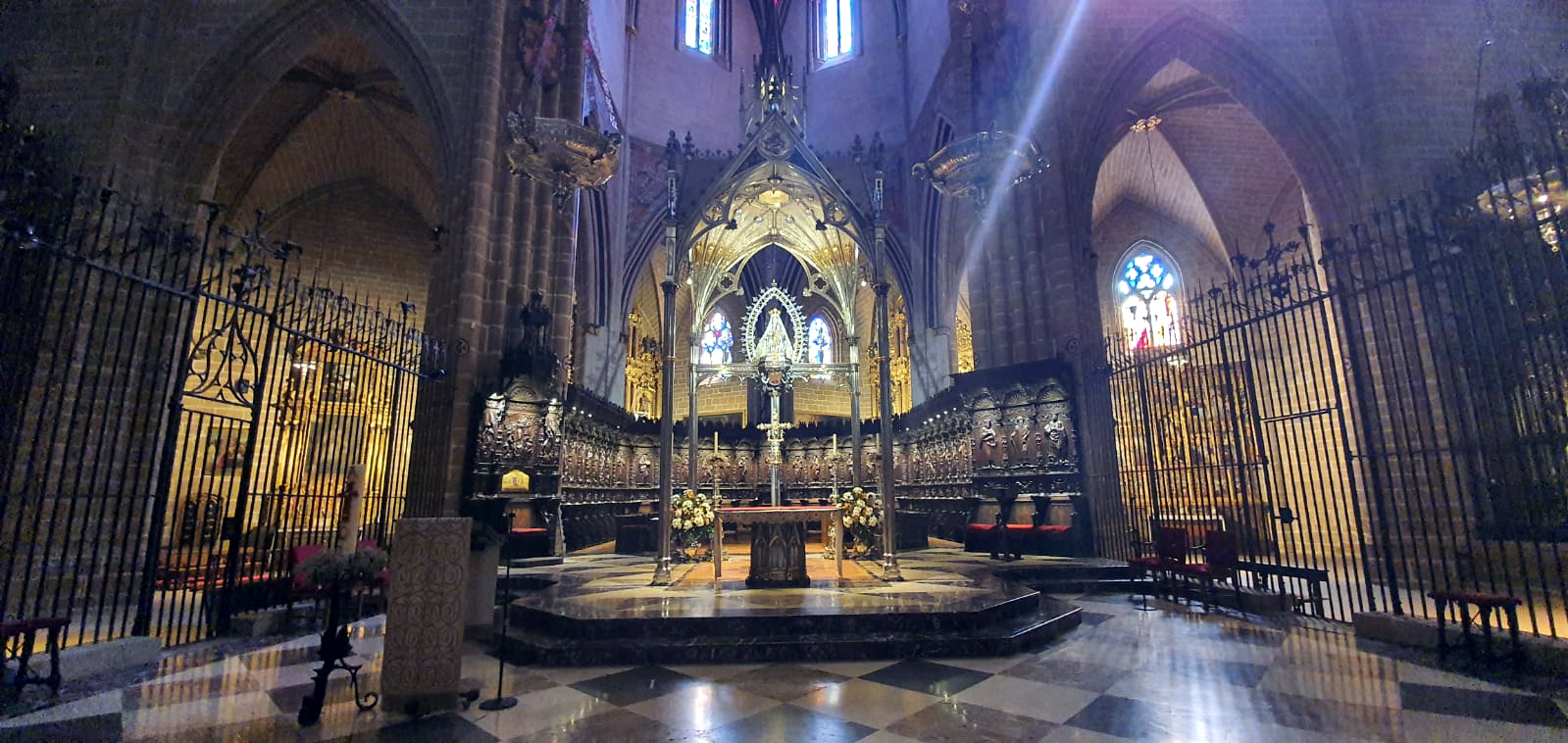
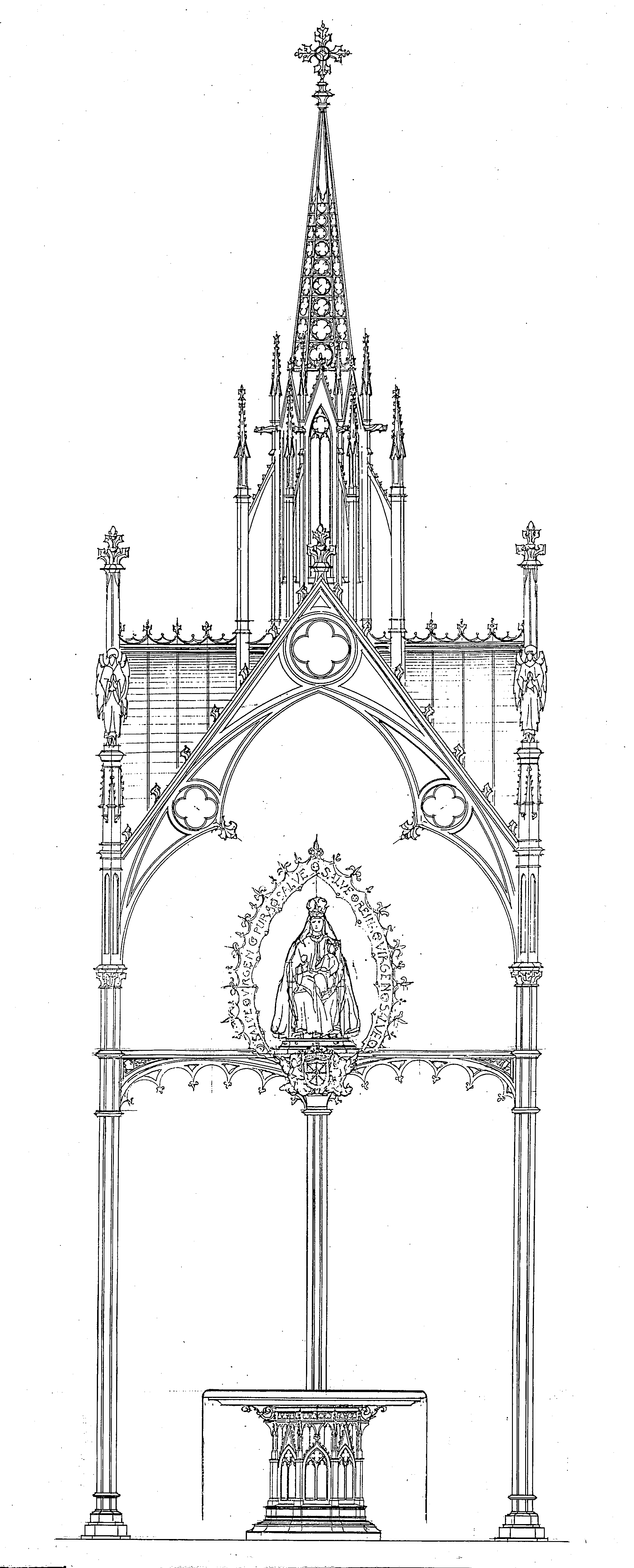
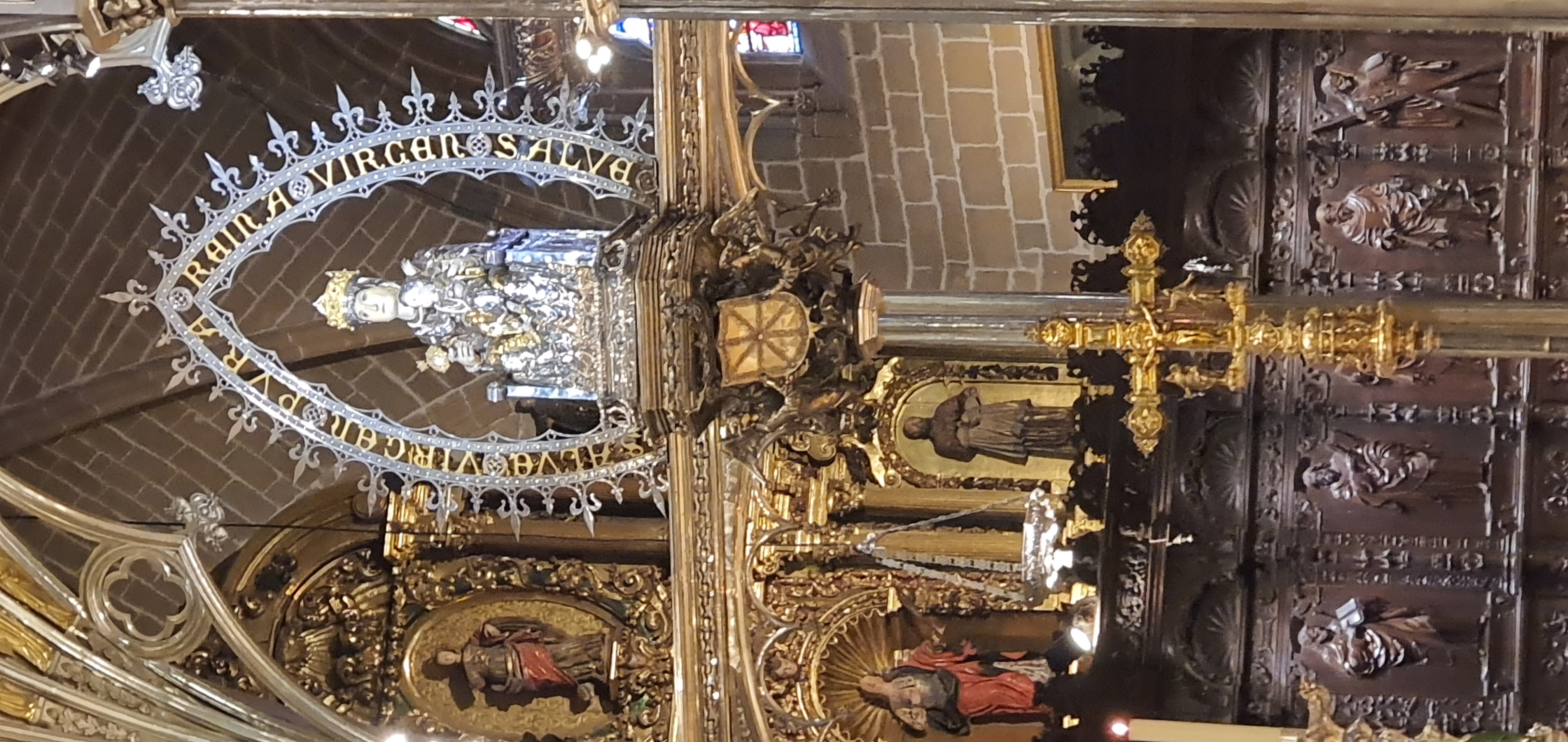
Our primary aim was to preserve the visual reference of the neo-Gothic baldachin with the image of Santa María la Real. This involved a delicate process of removing the stone base and supplementing the columns of the baldachin to maintain the proportion of the ensemble. The addition of a new column, whose capital supports the image of the Virgin, was a key part of this preservation effort. The solution we implemented ensured that the proportions and arrangement of the presbytery remained intact, with the baldachin and the image of the Virgin at the same height. The altar was thus isolated and highlighted by the baldachin, and the entire presbytery became open, with the Renaissance choir stalls as the backdrop. This allows ceremonies to be performed without impediments. The goldsmithing work was carried out by Mr. Rafael Moreno's (a professional goldsmith) workshop in Granada.
For the altar's design, we utilized the silver base that originally supported the image of the Virgin, which had been funded by donations from the faithful in 1946. We completed the Archbishop's Chair and created chairs for the concelebrants, reusing pieces from the Renaissance choir stalls made by Esteban de Obray. The entire choir stall was also cleaned.
As part of our design, we carefully planned the steps and new pavement to ensure that the altar was highlighted. This was crucial in ensuring that movements within the presbytery space were simpler and carried out with the intended dignity. We also studied appropriate lighting to further enhance the space.
The renovation work was coordinated with an archaeological excavation, which provided insights into the building’s subsoil and Pamplona's history.